
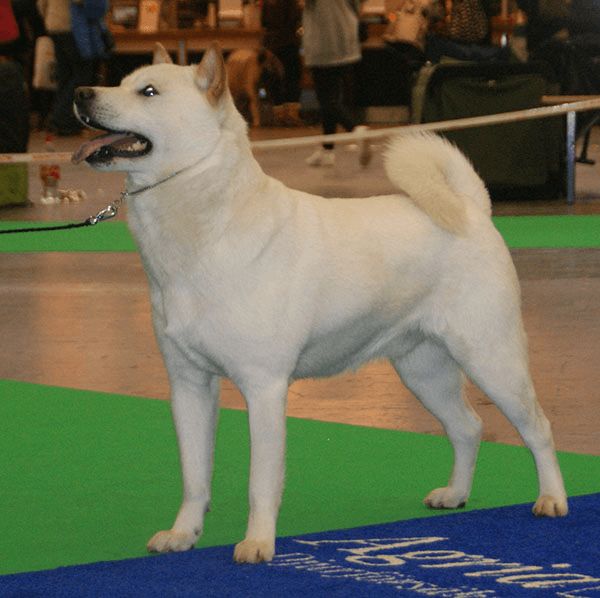

Description
The Kishu Inu, or Kishu Ken, is a medium-sized breed of very ancient Japanese origin. It is a quintessential one-family dog, forming a deep and abiding loyalty to its human pack. Once bonded, it does not handle changes in its family structure well, making consistency key to its happiness.
This breed is bold, proud, and an excellent hunter with a potent prey drive. This strong instinct must always be considered in its interactions with other domestic pets and wildlife. While it generally gets along well with other dogs, it may occasionally test boundaries and display dominant behaviors.
The Kishu is vigilant and watchful around strangers, showcasing its intelligence and natural wariness. It is a highly adaptable dog that thrives on a predictable daily routine. Provided it receives sufficient daily exercise and mental stimulation, it remains a calm and contented companion. Its high activity level and notable endurance make physical activity non-negotiable for its overall well-being.
Grooming a Kishu Inu is relatively straightforward. Regular brushing, especially during seasonal shedding, and a diet of high-quality food are the cornerstones of keeping this noble breed in excellent condition.
FCI Standard
FCI-Standard N° 318 / 16. 06. 1999 / GB
KISHU
ORIGIN : Japan.
DATE OF PUBLICATION OF THE ORIGINAL VALID STANDARD : 20.12.1994.
UTILIZATION : Hunting dog, companion.
CLASSIFICATION F.C.I. : Group 5 Spitz and primitive type.
Section 5 Asian Spitz and related breeds.
Without working trial.
BRIEF HISTORICAL SUMMARY : This breed originated from medium-sized dogs that existed in Japan in ancient times. It became established as a breed in the mountainous districts in Kishu (Wakayama and Mie Prefecture). Initially, these dogs’coats were often marked with conspicuous colours such as red, sesame or brindle. From 1934, however, only solid colours were accepted for this breed; conspicuously marked coats had disappeared by 1945, never to reappear. Currently, white coats may be found in this breed.
These dogs are used for hunting, now mainly wild boar, but at one time also deer. The breed took on the name of the region where it was bred. It was designated as a « natural monument » in 1934.
GENERAL APPEARANCE : Medium-sized dog, well balanced and muscles well developed. The dog has pricked ears and a curled or sickle tail. The conformation is strong, well boned and compact.
IMPORTANT PROPORTION : The ratio of height at withers to length of body is 10 : 11.
BEHAVIOUR / TEMPERAMENT : Dog of noteworthy endurance, showing nobility, dignity and naive feeling. The temperament is faithful, docile and very alert.
HEAD
CRANIAL REGION :
Skull : Forehead broad.
Stop : Rather abrupt, with a slight furrow.
FACIAL REGION :
Nose : Black, flesh colour permitted with a white coat. Nasal bridge straight.
Muzzle : Fairly thick, wedge-shaped and tapering.
Lips : Tight.
Jaws/Teeth : Strong, with a scissor bite.
Cheeks : Relatively well developed.
Eyes : Relatively small, nearly triangular, set well apart and dark brown in colour.
Ears : Small, triangular, slightly inclining forward and firmly pricked.
NECK : Thick and muscular.
BODY :
Withers : High.
Back : Straight and short.
Loins : Broad and muscular.
Chest : Deep, ribs moderately sprung.
Belly : Well tucked up.
TAIL : Set on high, thick, carried vigorously curled or curved like a sickle over the back, the tip nearly reaching to the hocks when let down.
LIMBS
FOREQUARTERS :
Shoulders : Moderately sloping with well developed muscles. Shoulder joints moderately angulated.
Elbow: Set close to the body.
Forearm : Straight.
Pasterns : Slightly inclining.
HINDQUARTERS :
Upper thighs : Long.
Lower thighs : Short.
Hocks : Tough and strong.
FEET : Toes well arched and tightly closed. Pads thick and elastic. Nails hard and preferably dark in colour.
GAIT / MOVEMENT : Light and resilient.
COAT
HAIR : Outer coat harsh and straight, undercoat soft and dense. The hair on cheeks and tail fairly long.
COLOUR : White, red and sesame (red fawn hair with black tips).
SIZE :
Height at withers : Dogs 52 cm.
Bitches 46 cm.
There is a tolerance of + 3 cm.
FAULTS : Any departure from the foregoing points should be considered a fault and the seriousness with which the fault should be regarded should be in exact proportion to its degree and its effect upon the health and welfare of the dog.
• Bitchy dogs/doggy bitches.
• Long hair.
ELIMINATING FAULTS :
• Aggresive or overly shy.
• Extremely overshot or undershot mouth.
• Ears not pricked.
• Hanging tail, short tail.
• Shyness.
Any dog clearly showing physical or behavioural abnormalities shall be disqualified.
N.B. : Male animals should have two apparently normal testicles fully descended into the scrotum.